20 UK Survival Experts to Know in 2026: A TV Survivalist’s View
By Steven Kelly
I have spent years working in the survival world, first through a 23-year British Army career that included 29 Commando Regiment Royal Artillery, then as a professional survival instructor and TV survivalist.
I have completed 56 days across the Naked and Afraid franchise, including a 21-day challenge in Colombia and 35 days on Naked and Afraid: Apocalypse in South Africa. I have also appeared on Naked, Alone and Racing to Get Home and Bear Grylls: Wild Reckoning, and through The Survival Debrief Podcast I have spoken at length with people who operate across survival television, bushcraft, expeditions and extreme environments.
So this is not pretending to be an independent scientific ranking. These are 20 UK survival experts, bushcraft instructors, TV survivalists and adventurers I think are worth knowing in 2026, based on their experience, achievements and contribution to the outdoor world.
I have included myself because this is my website and pretending the list is completely neutral would be daft. I will let my experience and credits speak for themselves.
How I chose this list
There is no single route to becoming a survival expert.
Some people come through military SERE and fieldcraft. Some spend decades teaching bushcraft. Others build their reputation through expeditions or have had their skills tested publicly on survival television.
I have deliberately mixed those backgrounds because survival is bigger than fire lighting and shelter building. It is also judgement, resilience, risk management, navigation, adaptability and the ability to keep functioning when the original plan fails.
TV survivalists and survival presenters
1. Bear Grylls
Bear Grylls is the most internationally recognisable British survival personality of the modern era. His television career took survival entertainment to a global audience through programmes including Man vs. Wild and Running Wild with Bear Grylls.
His style is deliberately high-energy and television-led, which is very different from traditional bushcraft teaching, but the scale of his impact is impossible to ignore. He helped make survival a mainstream entertainment category and introduced millions of people to outdoor problem-solving, resilience and adventure.
I later appeared with my wife Jenny on the BBC series Bear Grylls: Wild Reckoning, which gave me another perspective on the way outdoor pressure can be used to reveal decision-making and behaviour.
2. Ray Mears
Ray Mears sits at the other end of the survival television spectrum. His work is slower, more instructional and rooted heavily in bushcraft, traditional skills and understanding the environment rather than beating it.
For a generation of British instructors, Ray was one of the people who brought bushcraft into the mainstream. His teaching around fire, tracking, wild food, shelter, campcraft and indigenous knowledge helped shape the modern UK bushcraft industry.
If Bear Grylls helped globalise survival entertainment, Ray Mears helped legitimise bushcraft as a serious practical discipline.
3. Ed Stafford
Ed Stafford built his reputation through expedition before becoming one of Britain's most recognisable survival television personalities.
His walk along the length of the Amazon River established him as a serious modern explorer, and his later television work pushed him towards isolation, self-filming and stripped-back survival challenges.
What I rate about Ed's work is that he is prepared to show discomfort, poor decisions and psychological strain rather than presenting survival as a sequence of perfectly executed techniques. That is much closer to the reality of long-duration survival.
4. Steven Kelly
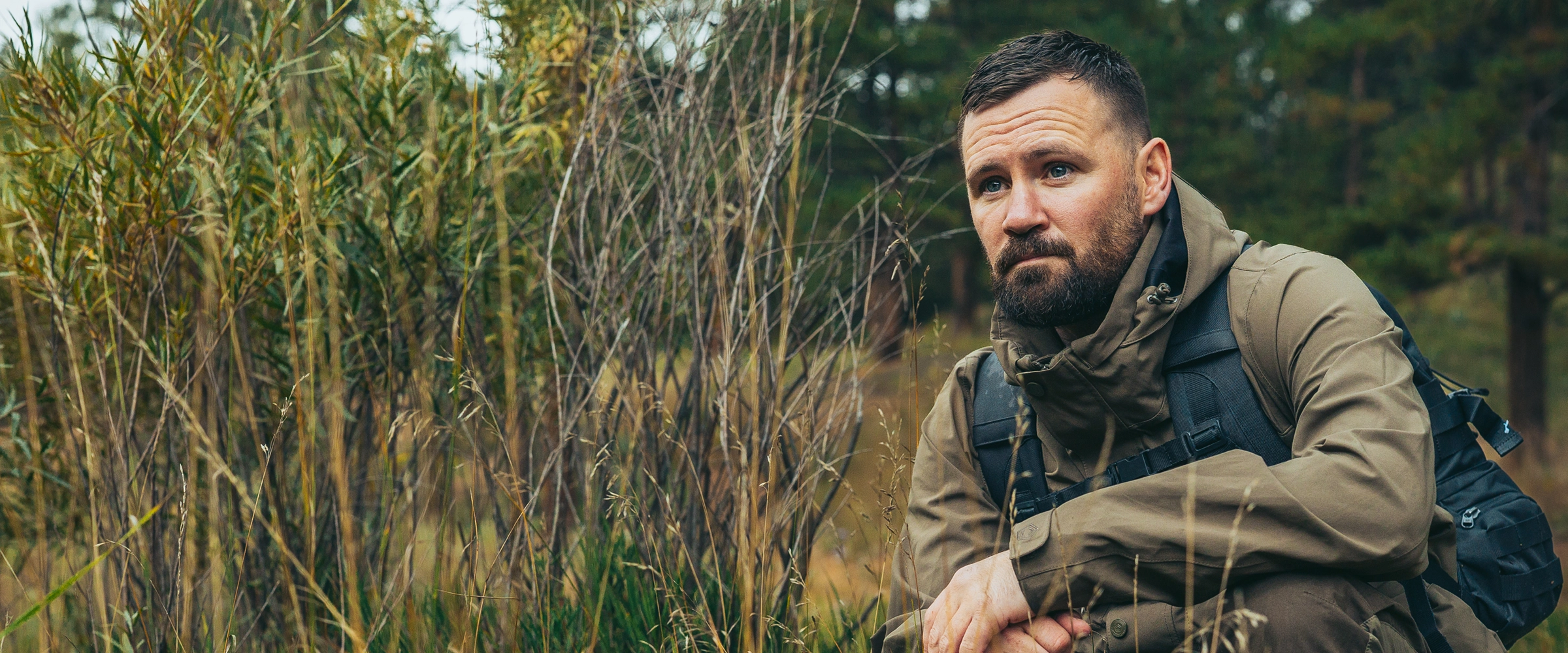
I am Steven Kelly, also known as Survival Ste. I am a British TV survivalist, professional survival instructor and former British Army Warrant Officer.
I served for 23 years in the British Army, including with 29 Commando Regiment Royal Artillery, and reached the rank of WO2. My military background gave me extensive experience in fieldcraft, navigation, training, leadership and operating in difficult environments.
I have completed 56 days across two Naked and Afraid formats: 21 days on Naked and Afraid in Colombia and 35 days on Naked and Afraid: Apocalypse in South Africa. I completed both challenges without tapping.
My other television credits include Naked, Alone and Racing to Get Home and the BBC's Bear Grylls: Wild Reckoning.
Away from television, I founded South West Survival, where I teach practical survival and bushcraft, and I host The Survival Debrief Podcast.
You can see my full survival television background on my Naked and Afraid page and my TV Survival Expert page.
5. Megan Hine
Megan Hine is one of the strongest examples of a survival professional whose expertise extends far beyond appearing in front of a camera.
Her career spans expedition leadership, survival consultancy, remote safety, risk management and major television productions. She spent years working in the world around Bear Grylls productions, helping manage locations, movement, technical systems and real-world risk behind the scenes.
I have interviewed Megan on The Survival Debrief, and what stands out is how strongly she separates knowing bushcraft techniques from actually functioning when a situation becomes unstable. Her understanding of survival psychology and decision-making under pressure is a major part of her credibility.
6. Tom Williams
Tom Williams won the first series of Alone UK, giving him one of the clearest modern survival television credentials in Britain.
Alone is a very different test from a demonstration-based television programme. Isolation, food procurement, energy management and the mental pressure of operating without a partner become central to the challenge.
Tom has also built his work around remote survival experiences and expeditions. That combination of television performance and practical commercial experience puts him firmly in the current UK survival landscape.
7. Andrew Thomas Price
Andrew Thomas Price has been involved in British bushcraft and survival instruction for decades through Dryad Bushcraft.
His experience covers woodland skills, natural history, traditional bushcraft, wilderness travel and technical survival instruction. He has also developed a substantial television profile and taken his skills into the Alone franchise.
I have shared the survival and bushcraft event world with Andrew, and he represents the crossover between long-term professional instruction and modern survival television particularly well.
8. Naomi Aldwyn-Allsworth
Naomi Aldwyn-Allsworth is a survival instructor, expedition leader and television survivalist who appeared on Channel 4's Alone.
Through The Rambler's Mistress, she has also focused on helping more women develop practical confidence in bushcraft, wilderness skills and the outdoors.
That matters because the UK survival industry is broader and stronger when it is not presented as one narrow type of person doing one narrow type of activity.
9. Jamie Frizzell
Scottish survivalist Jamie Frizzell became known internationally through Discovery's Naked and Afraid franchise.
He was the first UK participant to take on a full Naked and Afraid challenge and has returned to the franchise more than once.
Long-duration survival television creates a very specific test: hunger, lack of sleep, weather, wildlife, teamwork and the psychological pressure of living with very little equipment for weeks at a time. Jamie's repeated participation gives him genuine experience of that environment.
10. Sam Mouzer
Sam Mouzer is another British survivalist who has tested himself on Discovery's Naked and Afraid.
He completed a 21-day challenge and later returned to the wider franchise, bringing a military background and a strong understanding of the mental side of difficult environments.
I include Sam because survival television is not just a technical skills test. The ability to keep making rational decisions while hungry, exhausted and uncomfortable matters just as much as the ability to make fire.
Military survival and extreme-environment specialists
11. John Hudson
John Hudson represents the professional military SERE side of survival.
A former RAF helicopter pilot and senior military survival instructor, his work has covered survival on land and sea, extreme environments and the psychology of staying alive when ordinary systems disappear.
His credibility comes from professional training responsibilities rather than simply television exposure, which is an important distinction. Military survival is a discipline in its own right and demands a very different approach from recreational bushcraft.
12. Aldo Kane
Aldo Kane is a former Royal Marines Commando sniper who has built a second career in expeditions, television and extreme-environment safety.
His work combines military experience, climbing, risk management and operating behind the scenes on complicated productions in remote locations.
That safety role is often overlooked. Keeping camera crews and contributors functioning in genuinely dangerous terrain requires more than looking capable on screen. It requires systems, planning and a constant understanding of what can go wrong next.
13. Jason Fox
Jason Fox is best known publicly through SAS: Who Dares Wins, but his background includes service as a Royal Marine Commando and with the Special Boat Service.
His post-military work has included expeditions, endurance challenges and operating under extreme pressure.
Foxy sits more towards the resilience, military and human-performance end of the survival spectrum than traditional woodland bushcraft, but those areas are directly relevant when survival becomes a problem of stress, fatigue and judgement.
14. Ollie Ollerton
Ollie Ollerton is another former Royal Marine and Special Boat Service operator who became widely known through SAS: Who Dares Wins.
His work today focuses heavily on leadership, resilience, mental performance and decision-making under pressure.
I would not describe that as traditional bushcraft, but survival is bigger than bushcraft. The ability to control emotion, prioritise correctly and continue operating when tired or uncertain is central to surviving difficult situations.
Bushcraft and primitive-skills specialists
15. Paul Kirtley
Paul Kirtley is one of the strongest names in the dedicated British bushcraft community.
He developed his career through professional instruction, including senior work with Ray Mears' Woodlore organisation, before establishing Frontier Bushcraft.
His teaching covers fire, campcraft, wild food, navigation, axes, wilderness travel and expedition skills. He is a good example of someone whose credibility is built primarily on long-term instruction and practical knowledge rather than mainstream television fame.
16. Will Lord
Will Lord specialises in prehistoric technology and primitive survival skills, which gives him a very distinctive position in the UK survival world.
His work includes flint knapping, primitive fire, bow making, hide work and the technologies our ancestors depended on long before modern outdoor equipment existed.
I have had Will on The Survival Debrief Podcast, and his depth of knowledge is immediately obvious. Primitive technology can sometimes be treated as novelty content online. In Will's case it is a serious lifetime discipline.
Expedition and adventure experts
17. Ness Knight
Ness Knight is an explorer, presenter and conservationist whose expeditions have taken her into remote and demanding environments around the world.
Her work sits more towards exploration than conventional bushcraft, but modern expedition survival demands navigation, logistics, physical endurance, environmental awareness and the ability to make good decisions repeatedly over long periods.
Those are survival skills, even when the person is not building a woodland shelter for television.
18. Laura Bingham
Laura Bingham has built her reputation through ambitious expeditions that rely heavily on resourcefulness and adaptability.
Her journeys have included travelling thousands of kilometres across South America with virtually no conventional financial safety net and leading a major river expedition in Guyana.
What makes that relevant to survival is the constant problem-solving. Expedition environments rarely fail in one dramatic way. Plans change, resources disappear and people have to keep adapting.
19. Ash Dykes
Welsh adventurer Ash Dykes is known for major endurance expeditions through Mongolia, Madagascar and along China's Yangtze River.
He is primarily an explorer and extreme athlete rather than a traditional bushcraft instructor, but expedition survival requires preparation, route planning, risk management, physical resilience and constant adaptation.
His achievements show another route into the wider survival and adventure world: proving capability through sustained expeditions rather than isolated skills demonstrations.
20. Levison Wood
Levison Wood is a British explorer, writer and documentary filmmaker whose long-distance journeys have taken him through some of the world's most demanding regions.
His background includes military service and major expeditions along the Nile, through the Himalayas and across politically complex terrain.
His work is about exploration more than conventional survival instruction, but extended journeys through remote environments still require many of the same qualities: judgement, planning, adaptability, cultural awareness and the ability to keep moving when conditions are uncertain.
What actually makes someone a survival expert?
I do not believe there is one qualification, television credit or military badge that automatically makes somebody a survival expert.
A credible survival professional normally has depth somewhere and competence across several connected areas.
That might include:
- fieldcraft and navigation
- fire, shelter and water
- food procurement and wild resources
- risk assessment
- first aid and emergency planning
- expedition experience
- military SERE or operational field experience
- leadership and decision-making
- teaching ability
- long-duration survival experience
The big separator for me is whether somebody can still make good decisions when they are cold, tired, hungry, frustrated or under time pressure.
That is why my own survival training increasingly focuses on systems and judgement rather than tricks.
What does a military survival background actually add?
A military background does not automatically make somebody a survival expert. It can, however, build habits that are extremely useful when circumstances deteriorate.
During my own Army career, including 29 Commando Regiment Royal Artillery, the biggest lessons were often about process: looking after equipment, managing small problems before they become big ones, navigation, personal administration, leadership and continuing to make decisions when tired.
Those habits later transferred directly into survival television.
You can read more about that crossover in my TV Survival Expert work.
Which British survivalists have appeared on Naked and Afraid?
Several British survivalists have taken on Discovery's Naked and Afraid franchise.
Steven Kelly completed 21 days in Colombia before returning for 35 days on Naked and Afraid: Apocalypse in South Africa, taking his total to 56 franchise days across two formats.
Jamie Frizzell was the first UK participant to take on a full Naked and Afraid challenge and has returned to the franchise.
Sam Mouzer also completed a standard 21-day challenge and later returned to the wider franchise.
For a deeper breakdown, read my guide to British Naked and Afraid survivalists.
Survival is bigger than television
Television creates visibility. It does not automatically create expertise.
Some of the most knowledgeable people in British bushcraft will never become household names. Others have spent decades teaching, guiding, training military personnel or developing specialist skills away from mainstream cameras.
At the same time, long-duration survival television can expose weaknesses that are hard to reproduce on a weekend course. Hunger, isolation, lack of sleep and interpersonal pressure change the way people perform.
The strongest survival professionals understand both sides: technical competence and human performance under pressure.
My view of the UK survival scene in 2026
The UK has a strong survival and outdoor community, but it is becoming more fragmented.
Bushcraft, television, military resilience, adventure travel, emergency preparedness and online survival content are increasingly overlapping.
That creates opportunity, but it also creates a lot of people calling themselves experts without much depth behind the title.
For me, the useful test is simple: what have they actually done, what can they teach, and does their judgement hold up when things stop being comfortable?
That matters far more than follower count.
Want more survival content?
If you found this list through a search for UK survival experts, there are three good places to go next:
- Listen to The Survival Debrief Podcast for long-form conversations with survivalists, adventurers and outdoor professionals.
- Explore my Naked and Afraid story, including 56 days across the franchise.
- Read 7 Skills That Kept Me Alive on Naked and Afraid.
For television, speaking or media enquiries, visit my speaking and media enquiries page.
Frequently asked questions
Who are the most famous British survival experts?
Bear Grylls and Ray Mears are probably the two most widely recognised British survival personalities internationally, with Ed Stafford also holding a major global profile through expedition and survival television.
Who are some UK TV survivalists?
British survivalists with substantial television experience include Steven Kelly, Ed Stafford, Bear Grylls, Tom Williams, Andrew Thomas Price, Naomi Aldwyn-Allsworth, Jamie Frizzell and Sam Mouzer.
Who is Steven Kelly?
Steven Kelly, also known as Survival Ste, is a British TV survivalist, former British Army WO2, survival instructor and founder of South West Survival. His credits include Naked and Afraid, Naked and Afraid: Apocalypse, Naked, Alone and Racing to Get Home and Bear Grylls: Wild Reckoning.
What is the difference between bushcraft and survival?
Bushcraft generally focuses on developing the skills to live competently in natural environments. Survival is more focused on staying alive and functioning when circumstances have gone wrong. The two overlap heavily, but the mindset and priorities can be different.
About Steven Kelly
Steven Kelly, also known as Survival Ste, is a British TV survivalist, former British Army Warrant Officer, professional survival instructor, podcast host and founder of South West Survival.
His television credits include Discovery's Naked and Afraid and Naked and Afraid: Apocalypse, Naked, Alone and Racing to Get Home and the BBC's Bear Grylls: Wild Reckoning.
Find out more on the About Steven Kelly page.
7 Skills That Kept Me Alive on Naked and Afraid
Get the free guide, plus new journal posts and podcast episodes when they drop. Written by me, not an algorithm.
No spam. Unsubscribe any time.