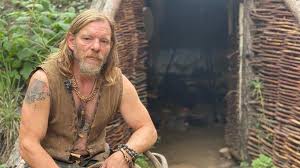
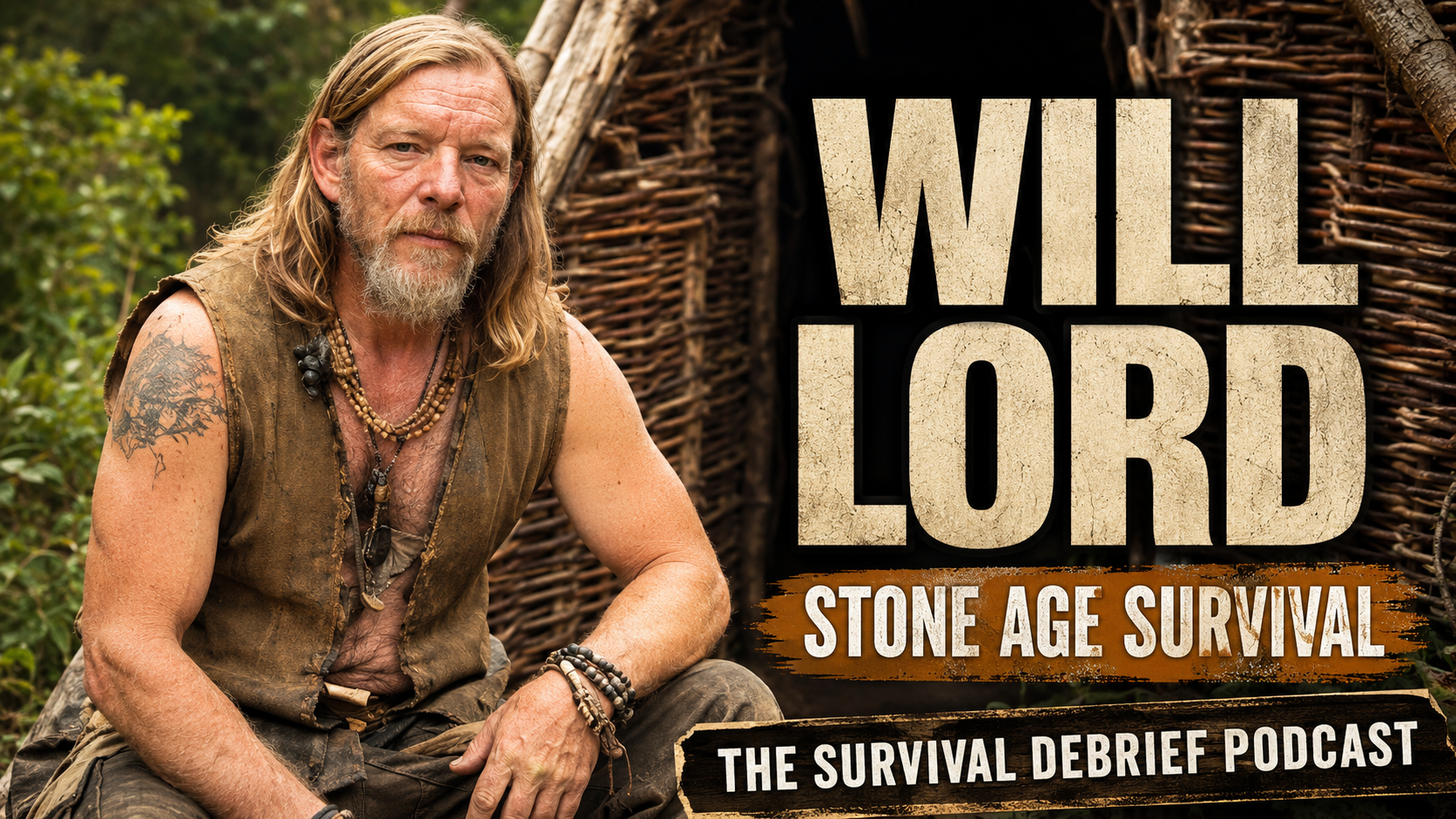
Will Lord: Stone Age Survival, Flint Knapping and the Primitive Skills Modern Survivalists Forgot
In this episode of The Survival Debrief Podcast, I sit down with Will Lord, one of Britain’s leading prehistoric survival skills experts.
This was not a chat about shiny survival kit or social media bushcraft trends. This was a proper conversation about Stone Age survival, flint knapping, ancient tools, primitive skills, land connection and what modern survivalists have forgotten.
Will has spent most of his life working with prehistoric skills. His journey started as a child growing up around Grimes Graves, a Neolithic flint mine in Norfolk. At around six years old, he picked up a barbed and tanged arrowhead made by his father, and that moment set him on the path he still walks today.
What stood out in this conversation was not just Will’s technical skill. It was the way he talks about the craft. He does not treat flint knapping as smashing rocks. He treats it as a language.
And that is where the real lesson starts.
Watch the full episode on YouTube:
https://www.youtube.com/watch?v=8zBVX7Qyh7M
Listen on Spotify:
https://open.spotify.com/episode/3rvJpMsTeJVaOXc2Nl7qfm?si=NCW7Mql_QiWIjcV1LN4R9A
Who Is Will Lord?
Will Lord is a prehistoric survival skills expert, flint knapper, craftsman and teacher. He is known for his work with ancient technology, Stone Age tools, bow making, hide tanning, fire lighting, natural materials and traditional survival skills.
He has also worked in the survival TV world, including training Ed Stafford before later competing against him on First Man Out.
But Will’s real authority comes from years of hands-on craft.
He started working with flint as a child, but he said he did not make an arrowhead he felt was truly good enough until his early twenties. That is a serious apprenticeship.
Today, many people want mastery after watching a short video. Will’s story is the opposite. It is a reminder that real skill takes years of failure, repetition and discipline.
Will Lord Flint Knapping: It Is Not Just Smashed Rocks
One of the strongest parts of this episode was Will’s explanation of flint knapping.
Most beginners think it is just a matter of hitting a stone hard enough and hoping something useful appears. I have done a couple of Will’s workshops myself, and I admitted during the episode that I mostly turned good flint into dust.
But that is the point.
Flint knapping exposes impatience quickly.
Will explained that if you want to get good at it, you need to accept that there is a long corridor ahead of you. You do not master it straight away. You fail, adjust, learn, fail again and slowly build confidence.
Coming from a military background, I understand operating under pressure. I can get from A to B, work in harsh environments and survive with limited kit. But fine craft is different. It demands a slower mind. It demands patience, accuracy and control.
Will compared it to chess. You lose a lot at the start, but the challenge itself becomes part of the reward.
That lesson applies far beyond flint.
The Difference Between Military Survival and Primitive Craft
This episode created a strong contrast.
My background is military survival, fieldcraft, operating in harsh environments and getting the job done under pressure.
Will’s world is different.
His work is about ancient materials, patience, craft and understanding the land at a deeper level. It is not about looking tactical. It is about understanding what is around you and turning raw material into something useful.
That is where prehistoric survival skills are powerful.
They slow you down. They force you to observe properly. They make you work with what is available instead of depending on modern kit.
Stone Age Tools and the Law of Zero Waste
A major theme in this episode was the prehistoric rule of waste nothing.
When flint breaks, even the small flakes can still become blades, scrapers or cutting tools. When an animal is processed properly, the meat, hide, sinew, bone and connective tissue can all be used.
Modern survival content often focuses on the dramatic moment: the fire, the shelter, the knife, the kill.
But real survival is not just the dramatic part.
It is the processing afterwards.
It is turning a carcass into food, cordage, clothing, glue, tools and material. It is understanding what nature gives you and how to rebuild it into something useful.
Will talked about working with deer backstrap and turning natural fibres into cordage for a buckskin knife sheath. He could use modern synthetic thread, but that would strip the story out of the item.
That is the point.
The old skills are not just practical. They carry meaning.
Will Lord, Ed Stafford and First Man Out
We also spoke about Will’s connection with Ed Stafford.
Before competing against Ed on First Man Out, Will had trained him in traditional skills. Ed first came to Will for bow making, then later returned for focused training around a “dead start” situation — having nothing and needing to work out how to survive.
That training included flint knapping, fire by friction, tracks, trapping, natural cordage and available fibres.
Years later, Will got the call to go to China and compete against Ed.
What I liked about Will’s answer was the honesty. He knew Ed was younger, fitter, taller and built for a physical endurance challenge. But Will also knew what he brought: deep craft, field knowledge and a different type of survival value.
Survival is not always about who moves fastest.
Sometimes it is about who understands the environment better.
Building Earth Lodge and Belonging to the Land
Another strong part of the conversation was Will talking about his land and Earth Lodge.
After years of teaching, travelling and working, he ended up on a piece of unmanaged wilderness on an estate. From there, he built a working outdoor life around ancient skills, teaching, craft and connection to place.
One thing he said stood out: he did not want to feel like a tourist in the forest.
That line matters.
A lot of people visit nature. Fewer people belong to it.
Will spoke about learning the land he is on. Not needing to know every plant in every location, but needing to know his place. His trees. His resources. His materials. His rhythms.
That is proper outdoor knowledge.
It is not just escape. It is relationship.
Why Primitive Survival Skills Still Matter
Primitive survival skills are not dead skills.
They still matter because they train the parts of us modern life weakens.
They teach:
- Patience — because natural materials do not care about your ego.
- Resourcefulness — because you must turn raw material into useful tools.
- Problem solving — because nothing works perfectly first time.
- Observation — because you have to read material, weather, ground and behaviour.
- Failure management — because you will get it wrong before you get it right.
- Respect — because food, fire, tools and shelter all take effort.
That is why these skills still matter in the 21st century.
Convenience has made people faster, but not always better. Primitive skills bring back attention, patience and competence.
The Most Important Prehistoric Skill Every Survivalist Should Learn
At the end of the episode, I asked Will a simple question:
What is one prehistoric skill every bushcrafter or survivalist should master?
His answer was immediate:
Net making.
That surprised me at first, but the more he explained it, the more sense it made.
A net can catch fish.
A net can catch birds.
A net can be used around water, banks, burrows and trails.
A net can work while you are doing something else.
A net turns cordage into calories.
That is serious survival value.
A knife is useful. Fire is vital. Shelter matters. But over time, food procurement becomes one of the hardest parts of survival. A net gives you passive food-gathering potential, and that makes it one of the most powerful prehistoric technologies.
It is also a skill you can practise cheaply. You need a netting needle, a gauge bar, some string and time. No expensive kit. No theatre. Just repetition.
That is the kind of skill more modern survivalists should be practising.
What I Took From This Conversation
I have done military survival. I have operated in jungles, arctic environments, mountains and deserts. I have taken on Naked and Afraid in the Amazon and returned for a 35-day challenge in South Africa.
But talking to Will reminded me of something important.
There is always another layer.
Military survival gives you a strong base: discipline, resilience, navigation, fieldcraft, stress control and operating under pressure.
Prehistoric survival skills bring something different. They connect you to the deep history of human survival. They force you to work with the land, not just move through it.
Will’s world is not about looking tactical.
It is about understanding material, time, craft and place.
Final Thoughts
This conversation with Will Lord was one of my favourite episodes so far because it cut right into the roots of survival.
Before modern knives, ferro rods, tarps, GPS, ration packs and lightweight kit, humans survived through observation, craft, patience and environmental knowledge.
Flint knapping.
Net making.
Hide tanning.
Cordage.
Bow making.
Animal processing.
Fire.
Shelter.
Land connection.
These are not just old skills.
They are human skills.
And most people have forgotten them.
Watch the full episode on YouTube:
https://www.youtube.com/watch?v=8zBVX7Qyh7M
Listen on Spotify:
https://open.spotify.com/episode/3rvJpMsTeJVaOXc2Nl7qfm?si=NCW7Mql_QiWIjcV1LN4
About The Survival Debrief Podcast
The Survival Debrief Podcast is hosted by Steven Kelly, also known as Survival Ste.
Steven Kelly is a British TV survivalist, former 29 Commando Regiment soldier, survival instructor, podcast host and founder of South West Survival.
After 23 years serving in the British Army and operating in some of the world’s harshest environments, Steven now uses his military survival background, television experience and outdoor training to interview survivalists, adventurers, military veterans and outdoor experts.
Steven has appeared on survival television including Naked and Afraid on Discovery Channel, where he survived in the Amazon and later returned for a 35-day challenge in South Africa.
For more episodes, blogs and survival content, visit:
Follow Steven Kelly / Survival Ste:
Instagram: https://www.instagram.com/survival_ste/
TikTok: https://www.tiktok.com/@survival_ste
Facebook: https://www.facebook.com/stevenkelly29
X: https://x.com/survival_ste
Join the South West Survival Mailing List
Get survival course updates, podcast episodes, outdoor skills breakdowns and behind-the-scenes survival content straight to your inbox
Who is Will Lord?
Will Lord is a British prehistoric survival skills expert, flint knapper, craftsman and teacher. He is known for his work with Stone Age tools, ancient technology, bow making, hide tanning, natural materials and primitive survival skills.
What is Will Lord best known for?
Will Lord is best known for flint knapping and prehistoric survival skills. His work focuses on making and teaching ancient tools, including arrowheads, blades, scrapers, bows, cordage and other traditional survival items.
What is flint knapping?
Flint knapping is the skill of shaping flint or similar stone into useful tools such as blades, scrapers, arrowheads and spear points. In the episode, Will explains that it is not just smashing rocks. It takes patience, control, understanding and years of practice.
Why is Grimes Graves important to Will Lord?
Grimes Graves in Norfolk is a Neolithic flint mine and a major part of Will Lord’s early life. In the podcast, Will talks about growing up around the site and how seeing and handling prehistoric flint tools as a child shaped his future.
Did Will Lord work with Ed Stafford?
Yes. Will Lord trained Ed Stafford in traditional skills before later competing against him on First Man Out. In the podcast, Will talks about working with Ed on skills such as bow making, flint knapping, fire by friction, tracking, trapping and natural fibres.
What is the biggest lesson from Will Lord’s approach to survival?
The biggest lesson is that survival is not just about kit, speed or brute force. Will’s approach is about patience, craft, observation, land connection and understanding how to turn natural materials into useful tools.
What prehistoric skill does Will Lord think every survivalist should learn?
Will’s answer was net making. He explained that a net is one of the most effective prehistoric survival tools because it can help catch fish, birds or small game, depending on the environment and legal situation. Practise the craft, but always check wildlife laws before using any trapping method.
Why do primitive survival skills still matter today?
Primitive survival skills still matter because they train patience, resourcefulness, problem solving and real-world competence. They force you to understand materials, land, weather, animals and your own limitations.
7 Skills That Kept Me Alive on Naked and Afraid
Get the free guide, plus new journal posts and podcast episodes when they drop. Written by me, not an algorithm.
No spam. Unsubscribe any time.