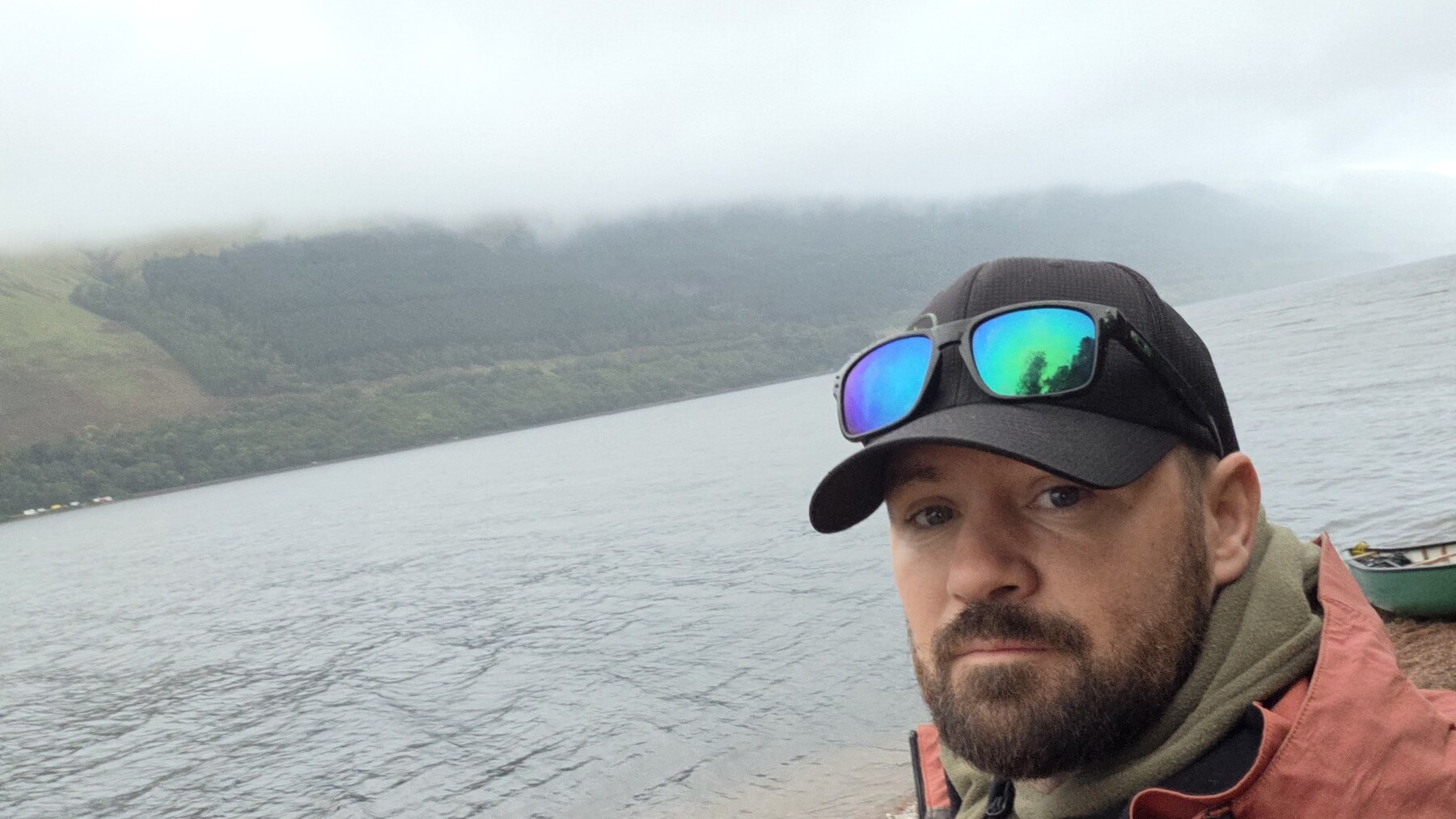
Five-Day Loch Ness Canoe Expedition: 14 Hours and 30+ Miles to Finish
Five days in a canoe through the Scottish Highlands ended with a final push that took 14 hours and covered more than 30 miles.
This expedition took us through Loch Lochy, Loch Oich and the full length of Loch Ness, living from the boats, setting up camp each night and dealing with whatever the Highland weather put in front of us.
There were calm moments, stunning scenery and good morale, but there was also relentless rain, long portages, soaked kit and hours when the only option was to keep paddling.
The final day was the biggest test. We covered the last two miles of Loch Oich, paddled the entire length of Loch Ness and then continued up the canal to the Jacobite Loch Ness Cruises car park. We reached the finish in darkness after 14 hours on the move.
Watch the full Scottish Highlands canoe expedition
Watch the full canoe expedition on YouTube.
A five-day journey through the Great Glen
The route carried us through some of the most impressive waterways in the Scottish Highlands.
- Loch Lochy
- Loch Oich
- Fort Augustus
- Loch Ness
- The canal to the Jacobite Loch Ness Cruises car park
This was not a day trip or a quick paddle for the camera. For five days, the canoes carried our equipment and became the centre of the expedition. Every morning meant breaking camp, packing the boats and getting back onto the water. Every evening meant finding a suitable place to stop, getting shelter up and sorting wet kit before doing it again the next day.
That repetition is where an expedition starts to test people. One hard hour can be managed. Repeated effort in bad weather, with poor sleep and no comfortable reset, exposes weak routines and weak attitudes very quickly.
Camping beside Loch Lochy
One of the best camps was the Trailblazer campsite on the banks of Loch Lochy.
It was a proper Highland setting and a strong place to wake up, but there was no lazy morning. Breakfast was fuel for the next stage, not the end of the day. Once the boats were loaded, we were back onto the loch and moving towards Fort Augustus.
That is the rhythm I enjoy on expeditions. Eat, pack, move, make progress and deal with the next problem when it arrives.
Day four: 12 miles in relentless rain
Day four was the point when the weather properly turned against us.
We paddled around 12 miles through Loch Lochy and Loch Oich in horrendous rain. It was relentless. Visibility dropped, everything became harder to manage and the miles felt much longer than they looked on a map.
Rain does more than make an expedition uncomfortable. It affects kit, morale, body temperature, visibility and decision-making. Small jobs take longer. Hands become cold. Clothing stays wet. The temptation to rush camp setup becomes stronger at exactly the point when good routines matter most.
There was no clever answer. We kept the boats moving, reached the stopping point and got camp established.
The tough days are not always enjoyable while they are happening, but they are usually the days people remember.
The Fort Augustus portage and a bacon butty
Before taking on Loch Ness, we had to move the boats across the portage at Fort Augustus.
A portage sounds simple until a loaded canoe, wet equipment and tired bodies all have to be moved from one stretch of water to the next. It is part of the journey and it still takes effort even when the paddles are not in the water.
Once the boats were across, we stopped for a well-earned bacon butty in Fort Augustus.
That small break did more than put food in us. It lifted morale before the biggest section of the route. Then it was time to load up again and face Loch Ness.
The final push across Loch Ness
The final day became far bigger than a normal last leg.
We began with the remaining two miles of Loch Oich, then committed to paddling the full length of Loch Ness. From there, we continued along the canal towards the Jacobite Loch Ness Cruises car park.
By the time we finished, we had been moving for around 14 hours and had covered more than 30 miles.
We arrived in darkness.
There was no crowd waiting and no big finish line. Just tired people, wet equipment and the satisfaction of knowing every mile had been earned.
Finishing at night made it feel even more real. When daylight disappears, fatigue feels heavier and the remaining distance can play games with your head. The job is to stop thinking about the whole distance and concentrate on the next useful action.
One paddle stroke. Then another. Keep the boat moving until the objective is complete.
What the expedition demanded
Canoe expeditions are not only tests of upper-body strength. The real challenge is the accumulation of effort.
- Pacing: Starting too hard is useless when the day lasts 14 hours.
- Teamwork: Boats, equipment, camps and portages all run better when people communicate clearly.
- Kit discipline: Wet conditions punish poor packing and careless routines.
- Morale: A hot drink, a bacon butty or a good laugh can change the whole mood of a difficult day.
- Mental endurance: The distance still has to be covered after the excitement has worn off.
Those lessons are familiar from my 23 years in the British Army, survival television and other expeditions. Different environments create different problems, but the foundations stay the same: prepare properly, look after the team and keep making useful decisions when you are tired.
Why I keep taking on expeditions
I am at my best when I have a clear objective, a capable team and a difficult environment to move through.
Expeditions strip away noise. The priorities become simple: stay safe, manage the team, protect the equipment, keep moving and finish what you started.
This journey through Loch Lochy, Loch Oich and Loch Ness delivered all of that. It gave us spectacular Highland scenery, brutal rain, a demanding final day and a finish that had to be earned in darkness.
I would do it again.
Watch the expedition and follow the next challenge
Watch the full five-day Loch Ness canoe expedition on YouTube.
If you enjoy real expedition, survival and outdoor content, subscribe to my YouTube channel and follow the next challenge.
You can also explore more of my expedition and survival journals, learn about my work as a TV survival expert, or visit South West Survival for professional survival and bushcraft training.
About Steven Kelly
Steven Kelly, also known as Survival Ste, is a British TV survivalist, former 29 Commando Regiment soldier, professional survival instructor, adventurer and founder of South West Survival.
His television credits include Discovery's Naked and Afraid and Naked and Afraid: Apocalypse, Channel 4's Naked, Alone and Racing to Get Home and the BBC's Bear Grylls: Wild Reckoning.
For television, speaking and media enquiries, visit the Speaking and Media Enquiries page.
7 Skills That Kept Me Alive on Naked and Afraid
Get the free guide, plus new journal posts and podcast episodes when they drop. Written by me, not an algorithm.
No spam. Unsubscribe any time.