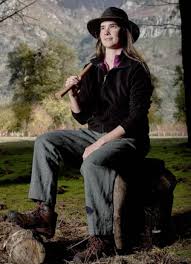
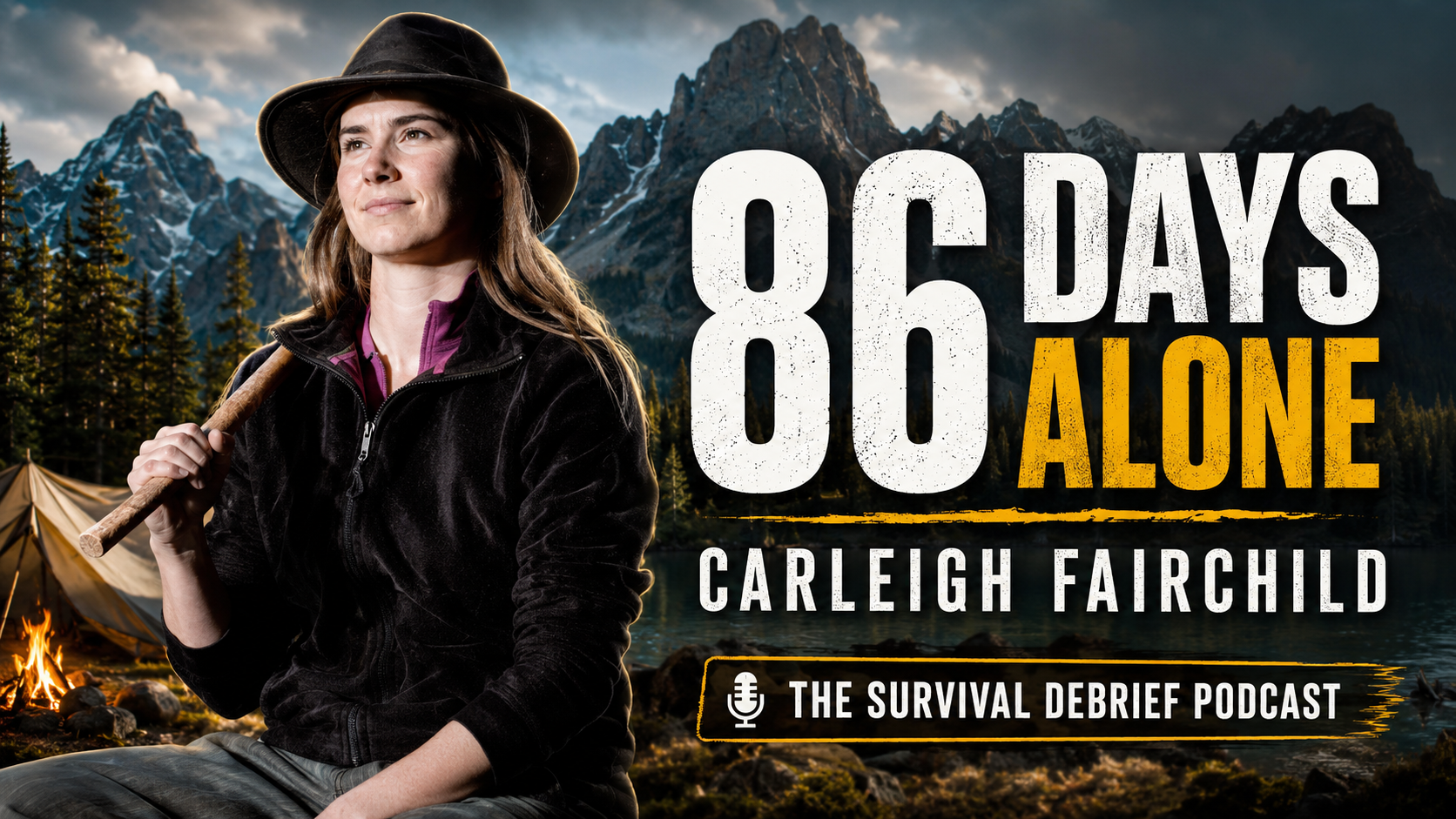
Carleigh Fairchild: 86 Days Alone in Patagonia — Survival, Mindset and Redemption
Carleigh Fairchild on Surviving 86 Days on Alone & The Mental Cost of Survival
Some survival stories are about winning. Others are about what happens when your mind is still in the fight, but your body, injury, or the medical team removes the choice.
That is what makes Carleigh Fairchild’s story so powerful.
In this episode of The Survival Debrief Podcast, I sit down with Carleigh Fairchild, best known for surviving 86 days alone in Patagonia on Alone Season 3, before being medically pulled from the challenge. This was not a casual tap-out. Carleigh was still mentally committed. She was thinking about 90 days, maybe even 100. But her body had been pushed so far that the medical team made the decision for her.
For anyone interested in survival TV, wilderness mindset, long-term isolation, and what viewers do not always see on screen, this is a proper episode.
Listen on Spotify:https://open.spotify.com/episode/1cG6kBQUUafjb07DvGpBuI?si=BaWK0O5VRFGsyR8kXh-fMg
Listen on Apple Podcasts:https://podcasts.apple.com/us/podcast/the-survival-debrief-podcast-with-steven-kelly/id1844233698
Watch the full episode on YouTube:https://youtu.be/vYv9n2d33YQ
Listen to more episodes of The Survival Debrief Podcast:https://www.stevenkelly.uk/podcast
Who is Carleigh Fairchild?
Carleigh Fairchild is a survivalist, earth-skills practitioner, and former Alone contestant who became known for her deeply personal survival journey in Patagonia.
Her survival background started young. In the podcast, Carleigh explains that her journey began through family outdoor skills and survival camps when she was a teenager. She studied earth connection, primitive skills, and the idea of going into nature with very little and allowing the land to provide.
That foundation shaped the way she approached Alone. When she was dropped off in Patagonia and the boat left, she did not immediately charge into building and gathering. She took a moment to sit, breathe, look across the lake, and introduce herself to the place. She saw the land not just as a resource, but as a relationship.
Surviving Alone in Patagonia
On Alone, there is no camera crew standing next to you. You are filming yourself, managing your shelter, finding food, keeping your mind together, and trying to survive for an unknown amount of time.
With Alone, the silence is part of the challenge. Carleigh described feeling relief when the boat left because the pressure of waiting was finally over. But once that moment passes, reality sets in. Shelter. Water. Fire. Food. Weather. Isolation. Filming. Risk. Injury. Hunger. And then you have to do it again the next day. For 86 days.
The Real Battle: Hunger and Fishing on Survival TV
One of the strongest parts of this episode is Carleigh’s honesty about food. Viewers often sit at home shouting at the television, wondering why contestants are not catching more fish or trapping more animals. But survival TV is bound by laws, protected species, production restrictions, and the harsh reality of the environment.
Fishing became her main focus, but success was limited. Survival is not just the skill of making a fishing line; it is the repeated emotional hit of trying, failing, getting colder, getting weaker, and still having to make smart decisions. At one point, Carleigh had to accept that a fishing spot with deeper water was too risky to access. The possible reward was not worth the potential injury. That is real survival thinking. Not ego. Risk versus reward.
The Mindset That Kept Her Going
The biggest lesson from Carleigh’s story is mindset. She did not frame the challenge around the question, “Am I done?” Instead, she asked herself: “Do I still want to be here?”
Even during low moments and tears, she kept coming back to that question. And the answer was still yes. She allowed emotion to move through her rather than pretending it was not there. Real resilience is not pretending you are fine; it is breaking down, recovering, making a decision, and carrying on with the next necessary task. That applies in the wilderness, in military life, and in business.
Medically Evacuated After 86 Days
Carleigh was eventually medically pulled from Alone after 86 days. She had lost a serious amount of weight, but mentally she still believed she could continue.
She talks in the episode about being heartbroken and disappointed. This raises a serious question about survival shows: Does the strongest survivalist always win, or does the body sometimes fail before the mind does? The audience sees a contestant leave, but the person living it knows whether they chose to quit or whether the choice was taken away.
What Viewers Did Not See on Screen
A television episode can only show a tiny fraction of what actually happens. Carleigh says the edit captured her journey well, but there was a lot viewers never saw—specifically, how much she actually loved the experience.
About a month in, she realised she was pushing herself too hard. She slowed down. She stretched, reflected, and meditated. You cannot run at full speed forever in the wild, in work, or in life. Sometimes slowing down is not a weakness; it is a strategy.
The Fish-Hook Injury on Alone: Redemption
Carleigh later returned for Alone: Redemption in Mongolia. She went back with experience, knowing what 86 days felt like. The food situation initially looked far better, catching more fish in the first few days than across the whole of Patagonia.
Then came the fish-hook injury. While retrieving a fish, a barbed hook buried itself under her thumb tendon. She tried to handle it in the field using yarrow and plantain, but the hook was too deep. The risk of infection or losing proper use of her hand was too great, forcing her to leave. Not because she lacked skill or mindset, but because one small piece of metal changed everything.
Carleigh’s Advice for Getting Outdoors
What advice would she give to someone wanting to get outdoors? Start where you live.
Walk around your neighbourhood. You do not need untouched wilderness to begin building a relationship with nature. Find a friend or mentor, then take a class in something that genuinely interests you—bow making, fire lighting, or tracking. Start small and build.
Steven Kelly’s Take
Carleigh Fairchild is exactly the kind of guest that belongs on The Survival Debrief Podcast. Her story connects survival TV, mindset, nature connection, medical extraction, and the emotional cost of extreme challenges.
Steven Kelly, also known as Survival Ste, is a British TV survivalist, former 29 Commando Regiment soldier, survival instructor, podcast host, and founder of South West Survival. Looking at Carleigh's journey, I see something vital: she had the mindset to continue. Her challenge was not ended by fear or lack of willpower; it was ended by physical risk and medical decisions.
Survival is not just about looking tough. It is about judgement, patience, self-awareness, and knowing when the land is giving you something, and when it is taking too much.
Watch and ListenWatch the full episode on YouTube:https://youtu.be/vYv9n2d33YQ
Listen on Spotify:https://open.spotify.com/episode/1cG6kBQUUafjb07DvGpBuI?si=BaWK0O5VRFGsyR8kXh-fMg
Listen on Apple Podcasts:https://podcasts.apple.com/us/podcast/the-survival-debrief-podcast-with-steven-kelly/id1844233698
More episodes of The Survival Debrief Podcast:https://www.stevenkelly.uk/podcast
FAQ
Who is Carleigh Fairchild? Carleigh Fairchild is a survivalist and former Alone contestant best known for surviving 86 days alone in Patagonia on Alone Season 3 and later returning for Alone: Redemption.
How long did Carleigh Fairchild last on Alone? Carleigh survived 86 days alone in Patagonia on Alone Season 3 before being medically pulled from the challenge.
Why did Carleigh Fairchild leave Alone? Carleigh was medically removed after extreme physical decline. In the podcast, she explains that mentally she was still ready to continue, but the medical decision was made for her safety.
What happened to Carleigh on Alone: Redemption? On Alone: Redemption in Mongolia, Carleigh suffered a fish-hook injury when a barbed hook became buried under her thumb tendon. She tried to manage it in the field but eventually had to leave due to the severe risk of infection.
Where can I watch The Survival Debrief Podcast? You can watch episodes on YouTube, listen on Spotify and Apple Podcasts, or visit the main podcast page at:https://www.stevenkelly.uk/podcast
Follow Steven Kelly (Survival Ste)Facebook: https://www.facebook.com/stevenkelly29 TikTok: https://www.tiktok.com/@survival_ste X: https://x.com/survival_ste
SubscribeWant more survival stories, mindset lessons, and behind-the-scenes conversations with real survivalists? Subscribe for new episodes, articles, and updates from Steven Kelly and The Survival Debrief Podcast via the website.
7 Skills That Kept Me Alive on Naked and Afraid
Get the free guide, plus new journal posts and podcast episodes when they drop. Written by me, not an algorithm.
No spam. Unsubscribe any time.