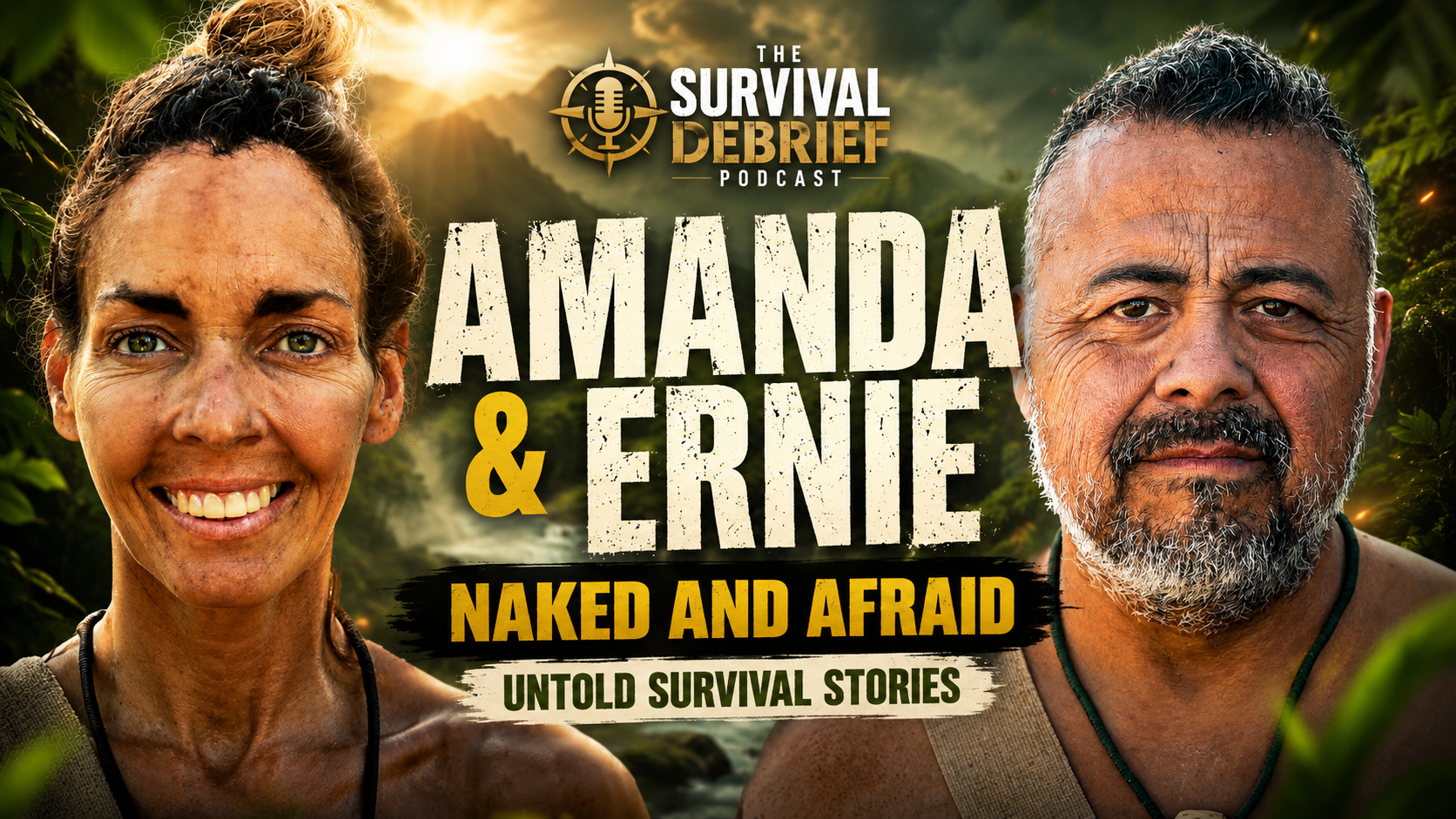
Amanda Wilson & Ernie Hinojos: From Fans to Naked and Afraid Survivalists
Amanda Wilson and Ernie Hinojos have one of the most interesting stories in the Naked and Afraid world.
They did not just watch the show and talk about survival from the sofa.
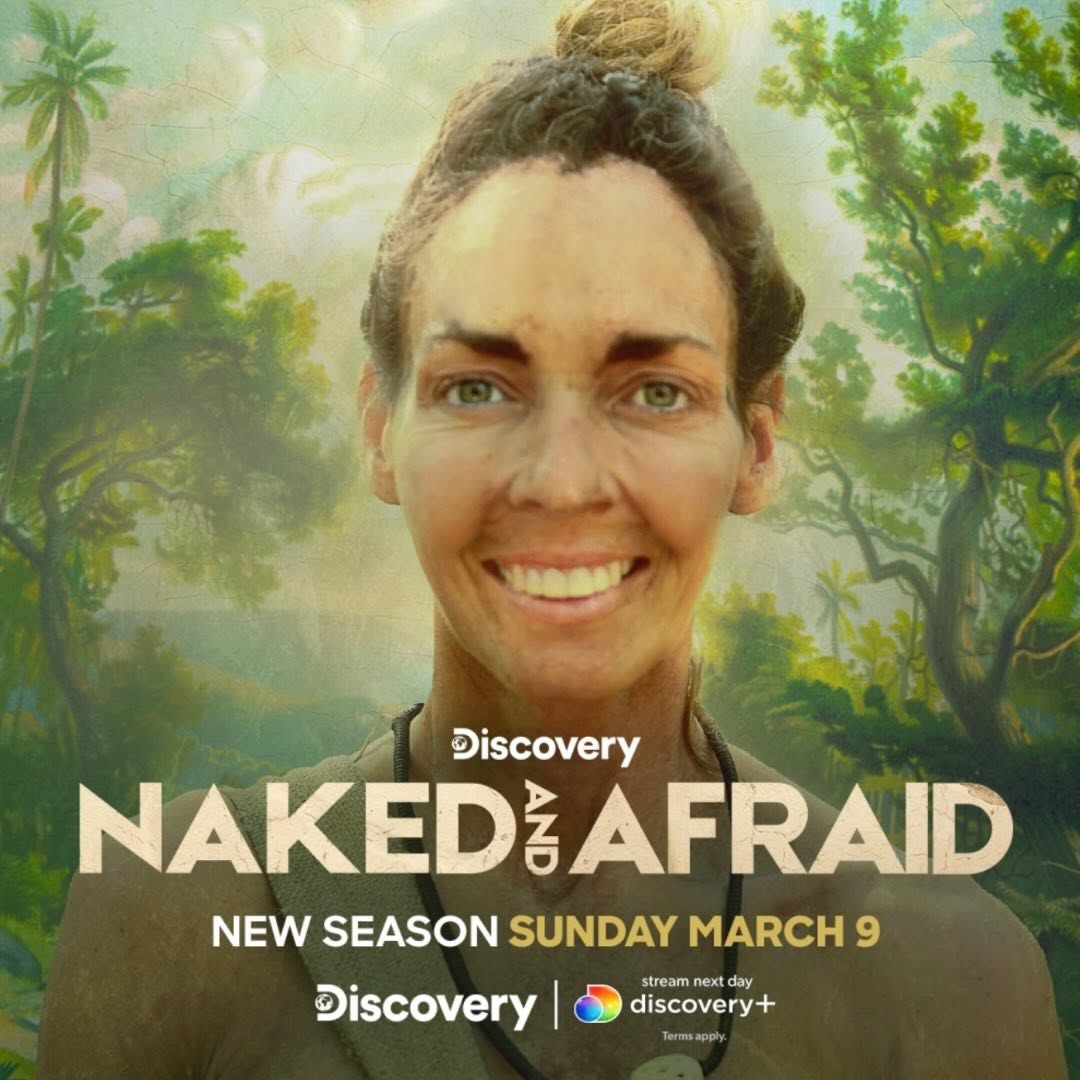
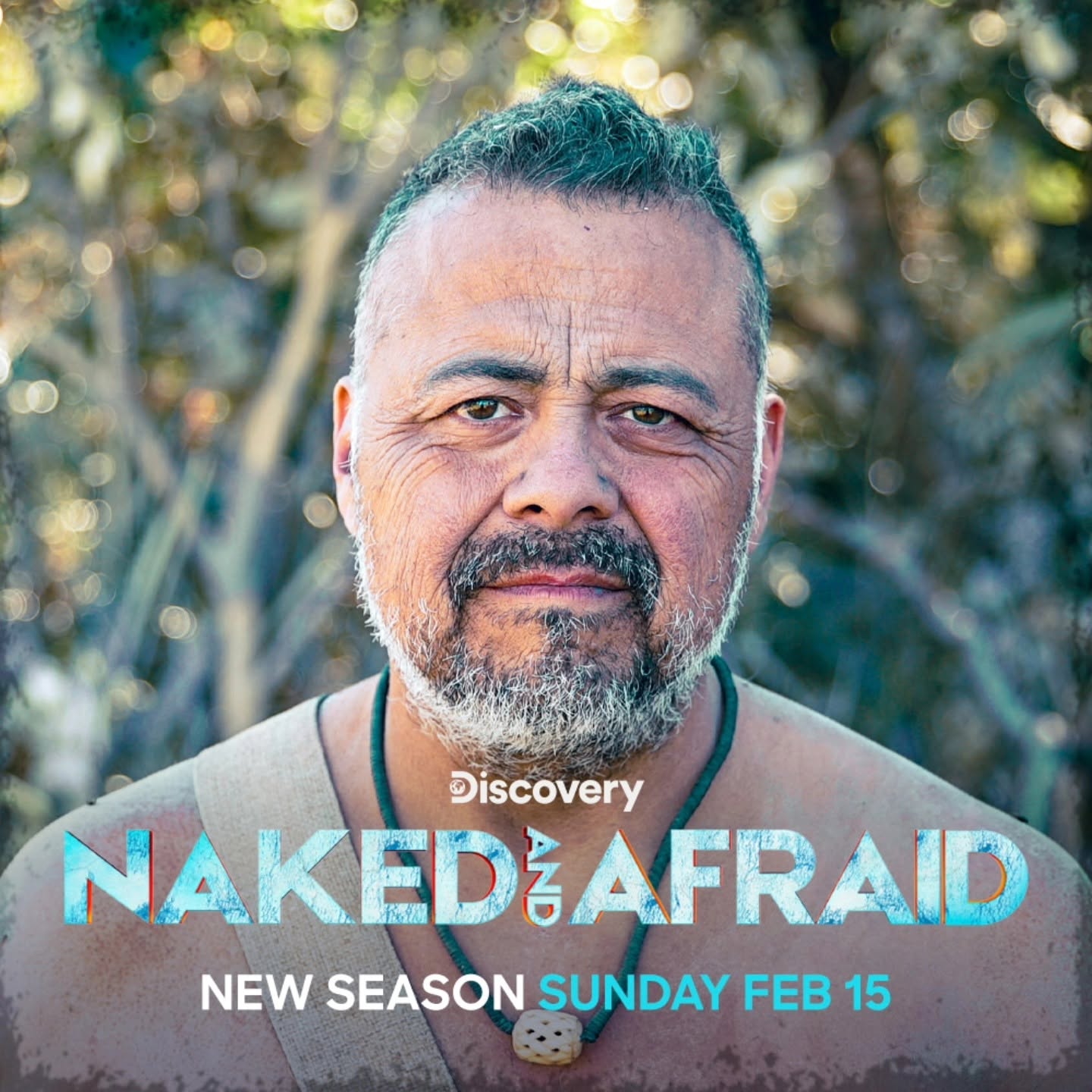
They went from fans of the franchise to stepping into the challenge themselves, first taking on a 14-day fan challenge together, then returning as a team for a brutal 21-day challenge.
That is 35 days together across Mexico and Botswana.
In this episode of The Survival Debrief Podcast, I sat down with Amanda and Ernie to talk about what really happened behind the edit, what viewers did not get to see, and why their partnership worked when so many others fall apart under pressure.
Watch the full episode here:
https://youtu.be/WwgRblQb7BA
Listen on Spotify:
https://open.spotify.com/episode/1UuLremYXmfx5VTj2fFZnf?si=WkDzQLBMRU-7HwoQGoqE2A
Listen to more episodes of The Survival Debrief Podcast:
https://www.stevenkelly.uk/podcast
Apple Podcasts:
https://podcasts.apple.com/us/podcast/the-survival-debrief-podcast-with-steven-kelly/id1844233698
Who Are Amanda Wilson and Ernie Hinojos?
Amanda Wilson and Ernie Hinojos are Naked and Afraid survivalists who built a reputation as one of the most likeable and effective duos in the franchise.
What makes their story different is the route they took.
They started as fans.
Then they became contestants.
Then they came back again.
That matters because there is a big difference between watching a survival show and living inside one. At home, everyone thinks they would build the perfect shelter, catch food, keep morale high and never argue.
Reality hits differently when you are hungry, cold, exposed, bitten, sleep-deprived and forced to make decisions with no comfort, no privacy and no easy way out.
Amanda and Ernie did not just survive the environment. They survived the pressure of partnership.
That is the real story.
From Fan Challenge to 35 Days of Survival
Amanda and Ernie first took on a 14-day challenge together.
Then they returned for a 21-day challenge.
Across both experiences, they built something that is rare on survival television: a partnership based on trust, humour, communication and work ethic.
In the interview, Amanda talks openly about being drawn to Naked and Afraid because it tested humility, gratitude and mental strength. She had military experience through the Marine Corps, but she was clear that primitive survival was not her normal lifestyle.
That honesty is important.
A lot of people try to dress themselves up as bulletproof before a survival challenge. Amanda did the opposite. She knew she was going into something that could break her down, humble her and test parts of herself that normal life does not touch.
That is what real survival does.
It strips the act away.
The First Awkward Moment: Getting Naked
Every Naked and Afraid survivalist gets asked about the same thing.
What is it like getting naked in front of a stranger?
Ernie did not sugarcoat it. He said it was the single hardest thing he did on the challenge.
Not hunger.
Not the terrain.
Not the bugs.
Not the danger.
The first brutal moment was standing there exposed, with cameras around, production instructions being given, and the reality of the show finally landing.
Amanda handled the nerves with humour. She admitted that when she is nervous, scared or overwhelmed, she uses humour to stop herself shutting down.
That is a strong lesson.
In survival, humour is not weakness. Used properly, it is a pressure-release valve. It keeps people human when the situation is trying to turn them into panic, anger or silence.
What Naked and Afraid Did Not Show
This is why I started The Survival Debrief Podcast.
The television edit can only show so much.
A 21-day challenge gets cut into a small window. Viewers see the headline moments, the arguments, the big wins, the dramatic failures and the main survival beats.
What they do not always see is the daily graft.
The wood collection.
The water boiling.
The failed food attempts.
The small conversations.
The teamwork.
The moments where someone nearly breaks but does not.
The quiet decisions that actually keep people in the challenge.
Amanda and Ernie explained that their relationship was even stronger than what viewers saw on screen. They were laughing, joking and working together from the start.
Ernie talked about how naturally they divided tasks. One would start one job, the other would step into the next job without ego or drama. That is what good fieldcraft looks like in a team.
No big speech.
No fake leadership performance.
Just awareness, work and trust.
Mexico vs Botswana: Which Was Harder?
Amanda and Ernie had different answers, and that is what made this part interesting.
Amanda said the Yucatán in Mexico was an environment she would never want to go back to. Resources were scarce, and the conditions were miserable after a hurricane had moved through the area.
But she also said Botswana put them through a deeper level of suffering.
The bugs.
The cold.
The mental pressure.
The exhaustion.
For Amanda, Botswana was harder overall, but the bond that came out of it was stronger.
Ernie saw it slightly differently.
For him, Mexico was the hardest environment because of the terrain and scarcity. Every step hurt. The ground cut into them. Food was hard to find. The place felt empty.
But Botswana, in his words, was more lethal.
Lions.
Elephants.
Hippos.
Cold.
Insects.
Constant pressure.
That is the difference between “hard” and “dangerous”.
Hard wears you down.
Dangerous can end you.
The Bat Cave Decision
One of the strongest moments in the conversation was their disagreement about leaving the cave in Mexico.
Amanda was worried about rain, storms and hypothermia. That is not irrational. In a survival situation, getting wet and cold can become serious very quickly.
Ernie was looking at the lack of resources and knew they needed to move.
This is where weak partnerships fail.
One person digs in.
The other gets resentful.
Ego takes over.
The team fractures.
Amanda and Ernie did not let that happen.
They talked. They delayed. They reassessed. Then they moved.
That move got them closer to extraction and helped them find a better water source.
This is a serious lesson for anyone interested in survival: sometimes staying in the “safe” place becomes the dangerous decision.
Comfort can trap you.
The Lowest Moments
Amanda had a low point on both challenges.
On the 14-day challenge, it came around day 10.
On the 21-day challenge, it hit around day 16.
She explained that once the major tasks were done — the boma, the firewood, the routine — she was forced to sit still. That is when the mind starts getting loud.
For people who are used to staying busy, stillness can be brutal.
No phone.
No distraction.
No comfort.
No way to avoid your own thoughts.
Amanda had lost a lot of weight, was physically drained, and still had several days to go. But even in that moment, she made her decision clear:
She was not going anywhere.
Ernie’s hardest moment came in Botswana when the cold got into him.
He described a night where the temperature dropped hard, the wind came in, the bugs had already kept them awake, and he could not get properly warm. That is when the spiral starts. Not because someone is weak, but because the body is being worn down faster than the mind can keep up.
Amanda had to step up for him the way he had stepped up for her.
That is what a real survival partnership looks like.
Not one hero carrying the other.
Two people taking turns being strong.
Why Their Partnership Worked
The biggest takeaway from this episode is simple:
Amanda and Ernie worked because they dropped the ego.
That is rare.
Survival shows are full of people trying to prove they are the alpha, the expert, the hardest, the toughest or the most important person in camp.
Most of the time, that behaviour is useless.
In the field, ego burns calories, creates conflict and destroys trust.
Amanda and Ernie had disagreements, but they dealt with them quickly. One example was a misunderstanding over the word “cocky”. Amanda took it one way. Ernie meant it another. They spoke about it, cleared it up and moved on.
That is how adults operate under pressure.
No sulking.
No silent treatment.
No performative drama.
No power games.
Just clear communication and back to work.
That is why fans connected with them.
Survival Is Not Just Skills
There is a lazy way people talk about survival.
They reduce it to fire, shelter, water and food.
Yes, those things matter. Of course they do.
But the longer the challenge goes on, the more survival becomes psychological.
Can you stay calm?
Can you work when you are tired?
Can you listen when your ego wants to talk?
Can you support someone else when you are also suffering?
Can you keep moving when the easy option is to quit?
Amanda’s advice was clear: keep a positive mindset, drop the ego and build endurance.
Ernie’s advice was equally direct: spend real time outdoors, learn to handle basic discomfort, get used to boiled water, and test yourself in conditions that are not comfortable.
That is not glamorous advice.
That is why it is useful.
Would They Do Another Naked and Afraid Challenge?
Yes.
Both of them said they would go again.
No hesitation.
That tells you something important. Despite the cold, hunger, bugs, pain, fear, exposure and mental strain, they would still step back into the arena.
That is not because the challenge is easy.
It is because people who have been properly tested often want to know where the next line is.
Amanda and Ernie clearly believe their story is not finished.
And based on this conversation, I agree.
I think fans would absolutely watch them again.
My Take as a Naked and Afraid Survivalist
As someone who has taken on Naked and Afraid myself, I know how much gets missed in the edit.
People at home see a fraction of what happens.
They do not see every failed hunting attempt.
They do not feel the cold in your bones.
They do not understand how long a night can be.
They do not see the mental calculations behind every small decision.
They do not understand how much effort goes into doing basic tasks when your body is empty.
That is why conversations like this matter.
Amanda Wilson and Ernie Hinojos are not just two people who appeared on a survival show. They are a case study in what happens when two people decide to operate as a proper team under pressure.
No ego.
No drama for the sake of it.
Just hardship, humour, trust and graft.
That is why their story stands out.
Watch or Listen to the Full Episode
Watch the full conversation with Amanda Wilson and Ernie Hinojos on YouTube:
https://youtu.be/WwgRblQb7BA
Listen on Spotify:
https://open.spotify.com/episode/1UuLremYXmfx5VTj2fFZnf?si=WkDzQLBMRU-7HwoQGoqE2A
Listen to more episodes of The Survival Debrief Podcast:
https://www.stevenkelly.uk/podcast
Apple Podcasts:
https://podcasts.apple.com/us/podcast/the-survival-debrief-podcast-with-steven-kelly/id1844233698
About Steven Kelly
Steven Kelly is a former British Army Commando Forces soldier, survival instructor, TV survivalist and host of The Survival Debrief Podcast.
He has appeared on Naked and Afraid, Naked and Afraid: Apocalypse, Naked, Alone and Racing to Get Home, and Bear Grylls: Wild Reckoning. Through his podcast, training and public content, Steven speaks with survivalists, adventurers, military veterans and outdoor professionals about what it really takes to perform under pressure.
Read more about Steven Kelly here:
https://www.stevenkelly.uk/about
Related Reading
If you are interested in more Naked and Afraid and survival TV breakdowns, read:
Steven Kelly on Naked and Afraid:
https://www.stevenkelly.uk/journal/steven-kelly-naked-and-afraid
Puma Encounter on Naked and Afraid: What It Felt Like in the Colombian Jungle:
https://www.stevenkelly.uk/journal/puma-encounter-on-naked-and-afraid-what-it-felt-like-in-the-colombian-jungle
Naked and Afraid vs Alone:
https://www.stevenkelly.uk/journal/naked-and-afraid-vs-alone
Follow Steven Kelly / Survival Ste
Facebook:
https://www.facebook.com/stevenkelly29
TikTok:
https://www.tiktok.com/@survival_ste
Subscribe
Want more real survival stories, podcast episodes and behind-the-scenes breakdowns from The Survival Debrief Podcast?
Subscribe for updates and get new episodes, blogs and survival content sent directly to your inbox.
7 Skills That Kept Me Alive on Naked and Afraid
Get the free guide, plus new journal posts and podcast episodes when they drop. Written by me, not an algorithm.
No spam. Unsubscribe any time.